
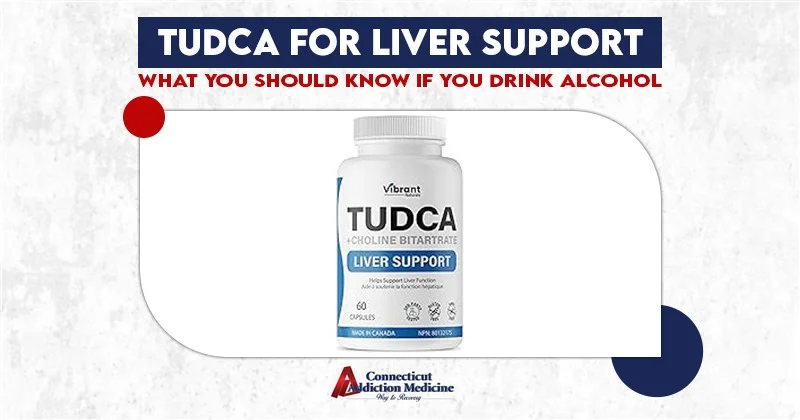
At CT Addiction Medicine, many of our educational moments don’t happen during formal lectures. They happen in between patients, when a nurse leans against the counter and says, “I had someone ask me today if there’s anything they can take to protect their liver because they drink.” That question opens the door to a much larger discussion of TUDCA—one about expectations, physiology, and what liver support really means.
One supplement that frequently comes up in those conversations is Tauroursodeoxycholic acid against alcohol and it’s often mentioned by patients who are not ready to quit drinking but are becoming aware of internal consequences. That awareness matters. It tells us the patient is thinking ahead, even if they’re not ready for full change yet.
This blog is written the way we talk among ourselves at the clinic—openly, carefully, and without exaggeration—so staff and patients alike can understand what this compound can realistically offer, and what it cannot.
Alcohol and the Liver: What’s Actually Happening Inside
When we explain liver health to new staff members, we often start with one key point: the liver absorbs the impact of alcohol quietly. There’s rarely immediate pain. No alarms go off after a heavy weekend. Instead, the damage—if it occurs—builds gradually.
Alcohol is processed almost entirely in the liver. Each time someone drinks, liver cells must convert alcohol into less harmful substances so it can be eliminated. During this process, inflammation increases, oxidative stress rises, and fat begins to accumulate within liver cells. Over time, repeated exposure can interfere with normal liver function.
We often tell staff to imagine a workplace where one department is forced to take on every emergency task, every single day. At first, productivity remains high. Eventually, systems slow down. Errors happen. Burnout follows. That’s the best way to understand what long-term alcohol exposure does to liver tissue.
Why Patients Look for Liver Support
Patients rarely walk in asking about liver disease directly. Instead, they ask indirect questions:
“Is my drinking hurting me?”
“Are my labs okay?”
“Is there something I can take to help my liver?”
These questions usually come before behavior change, not after. In addiction medicine, we respect that sequence. Concern is often the first step.
TUDCA supplement become attractive because they feel proactive. They offer a sense of control when someone is not yet ready to reduce or stop drinking. That’s why it’s important for staff to understand what these products actually do—so conversations stay grounded in reality.
What This Compound Is Known For
During one team meeting, a clinician summarized it well: “This is about bile flow and cellular stress, not miracle repair.” That framing has stayed with us.
TUDCA belongs to a group of substances related to bile acids, which play a role in digestion and internal signalling within liver cells. In certain medical contexts, similar compounds have been studied for how they influence bile movement and cellular stability.
When patients bring it up, they’re usually asking whether it can protect their liver from alcohol-related harm. That’s where careful explanation matters.
Alcohol Use and Supplement Expectations
One of the most common misunderstandings we hear is the idea that supplements offset alcohol. A patient might say, “I drink on weekends, but I take something during the week to balance it out.”
From a medical perspective, that’s not how liver physiology works.
Alcohol exposure triggers inflammation and metabolic stress immediately. No TUDCA supplement can reverse that process while drinking continues. Supportive compounds may assist normal liver processes, but they do not neutralize toxins or erase damage.
This is especially important when patients ask about combining this compound with ongoing drinking habits. We emphasize that support does not mean immunity.
Potential Side Effects and Tolerance
Every substance that affects bile acids can influence digestion. That’s something we consistently remind staff.
Commonly reported side effects include:
- Loose stools or diarrhea
- Abdominal discomfort
- Nausea
- Changes in digestion
These effects may be mild for some people and disruptive for others. Tolerance varies depending on dosage, individual metabolism, and underlying liver health.
One provider at our clinic often says, “If something improves one pathway, it can stress another.” That’s why even supplements require thoughtful use.
Can This Cause Liver Damage?
This is a question staff should never dismiss.
While generally considered well tolerated when used appropriately, misuse, excessive dosing, or poor-quality products can place unnecessary stress on the liver. This is especially true for individuals who already have:
- Fatty liver disease
- Alcohol-related hepatitis
- Undiagnosed fibrosis
- Medication interactions
In these cases, adding anything that alters bile flow or liver signaling without medical oversight can complicate the situation rather than help it.
So when patients ask, “Can this cause liver damage?” the honest answer is: it depends on the person, the dose, and the condition of the liver.
Why Medical Guidance Is Essential
In addiction medicine, context matters. A supplement does not come with a patient history attached.
Someone may appear healthy but have elevated liver enzymes. Another may be taking medications that rely on liver metabolism. Without proper evaluation, even supportive compounds can create unintended consequences.
This is why we encourage staff to frame supplements as part of a broader medical conversation—not as a standalone solution.
What It Can Help With—and What It Cannot
We often give staff a simple breakdown to use in patient conversations:
What it may help with:
- Supporting normal bile movement
- Reducing certain types of cellular stress
- Assisting liver processes under medical supervision
What it cannot do:
- Reverse established liver disease
- Cancel the effects of alcohol
- Replace alcohol reduction
- Substitute for clinical treatment
This approach keeps conversations honest without dismissing patient interest.
The Bigger Clinical Picture
One counselor shared a moment that resonated deeply with our team. A patient said, “I started worrying about my liver before I started worrying about my drinking.”
That statement matters. Liver concern often comes before readiness for change. When handled correctly, it becomes a bridge—not a barrier—to deeper conversations about alcohol use.
Supplements, labs, and education can all play supportive roles, but behavior remains the foundation of liver health.
Final Words
Our expert team ensures a genuine and compassionate approach to liver health at CT Addiction Medicine. Tauroursodeoxycholic acid (TUDCA) can be considered as a good supplement for liver support, but it doesn’t mean that this compound heals the liver against alcohol. The liver heals best through reduced exposure, informed choices, and proper medical care—not shortcuts.
Frequently Asked Questions
Q:Is this compound safe for people who drink alcohol?
Safety depends on individual liver health, dosage, and drinking patterns. Medical guidance is strongly recommended.
Q:Can it reverse alcohol-related liver damage?
No, but it can support your liver health as it acts as a good supplement.
Q:What side effects should patients watch for?
Most common side effects consist of changes in GIT, like bloating, discomfort in the abdomen, and diarrhoea.
Q:Should patients take it daily?
Daily use should only be considered under professional supervision, especially for those who drink alcohol regularly.
Q:Can it replace stopping or reducing alcohol?
No. Alcohol reduction remains the most effective way to protect liver health.
Q:Who should avoid it altogether?
For people having certain conditions like any disease of liver, other medicinal interactions, or suffering with the disorders associated to bile duct-this supplement is contraindicated until allowed by an expert.