
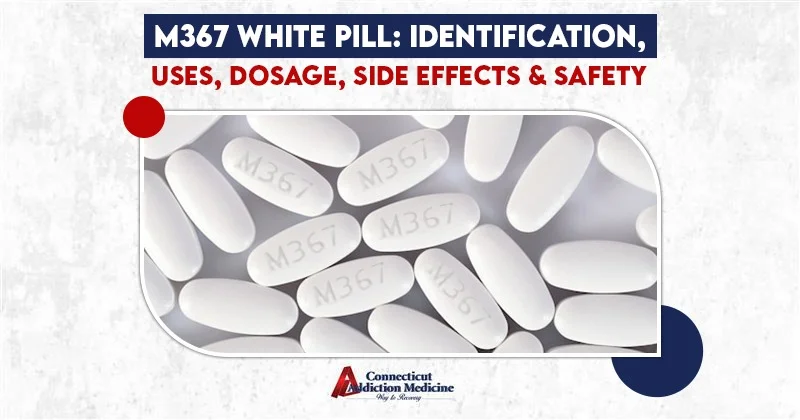
The M367 white oblong pill is a prescription medication because it is widely used for pain. It also carries risks when not taken correctly.
The M367 white pill is often prescribed for moderate to severe pain and is usually taken for short periods under medical supervision. However, misuse can lead to serious side effects, dependence, and overdose. Learning about identification, dosage, and safety is important for both patients and caregivers.
CT Addiction Medicine supports patients by offering education, monitoring, and treatment plans for those at risk of medication misuse.
What Is the M367 White Oblong Pill?
Hydrocodone-acetaminophen combo M367, white capsule shape, prescription forne hydrocordon plus acetaminophen. It is mostly to treat pain due to surgery, trauma, dental issues or other types of situations where milder medications cannot relieve the physical discomfort associated. Use should be limited to 30 days or less due to risk of developing tolerance/dependancy; Tablet has imprint codes “M367” located on it so people can identify it easily
M367 White Pill Identification Guide
Correctly identifying medications can prevent errors when administering them. The M367 white pill identifier on this webpage provides physical descriptions and the impressions of the pill.
Pill identification information:
Large White Oval/Capsule Shape
Imprint: “M367”
Prescription Only
If a medication is misidentified, it can have serious adverse effects. If there is any uncertainty regarding the identification of the medication, it is advisable to consult a pharmacist or other healthcare professional.
While there are internet resources available for pill identification, the consultant method is the safest approach.
M367 White Oblong Pill Used for
M367 can help relieve moderate to severe pain when other forms of pain management and treatment options are unavailable or do not work.
The most common m367 white oblong pill used for includes managing pain after a surgical procedure, from an injury, and from severe dental problems. Some physicians may prescribe it during acute exacerbations of a chronic pain condition.
Like other opioids, M367 is highly effective; however, prescription of this type of medication should not be the first choice for the management of long-term pain.
Non-opioid medications, physical therapy, and modifications to lifestyle are safer for patients who have chronic pain syndrome and desire to maintain their overall health.
Dosage and M367 Dosage Guidelines
The recommendations for Dosage of M367 should be followed very carefully in order to ensure that the patient receives the best possible care.
The amount of m367 a patient is taking will be adjusted by their physician based on several factors including: level of pain experienced by the patient, age of the patient, prior health history, and response to medications.
The prescribed amount of m367 may be taken in intervals of 4 to 6 hours, as needed. Patients must not take more than the advised amount without consulting their physician. Increasing the dosage does not equate to an increase in the effectiveness of pain control and may lead to toxicity issues.
Always refer to the patient’s prescription label when using this medication.
M367 Side Effects
The side effects associated with the medication M367 (Grade 10) can vary from mild to severe. The most commonly experienced side effects associated with this medication are drowsiness, nausea, dizziness, and constipation, which generally improve as the body becomes accustomed to the medication.
The more serious side effects associated with this medication are difficulty breathing, confusion, and low blood pressure, all of which should be considered medical emergencies. The use of alcohol and/or sedatives in association with this medication increases the likelihood of developing severe side effects associated with the medication.
Is the White Oblong Pill M367 Dangerous?
People frequently inquire if M367 is hazardous. How M367 is utilized determines if this medication is safe. If M367 is taken as prescribed, M367 can produce beneficial results and have a comparatively high level of safety for short-term treatment.
However, the risk associated with using M367 increases significantly if M367 is misused, shared, or consumed at excessive amounts.
Additionally, the potential for developing dependence or addiction increases with extended usage of M367, but implementing safeguards via limited access and ongoing observation can help minimize the risk of these ailments.
White Oblong Pill M367 Addiction Risk
Hydrocodone contributes to M367’s high risk of addiction, affecting brain pathways related to feelings of pleasure and reward. Over time, as individuals continue using the product or similar products; they develop a tolerance for them, requiring larger doses for the same effect.
Some individuals may develop a reliance on the medication both emotionally and physically over time. Craving, taking an excess amount, and experiencing anxiety without the drug are examples of early signs of addiction. Identifying these signals as they emerge allows for earlier intervention to prevent addiction from developing further.
M367 Overdose Symptoms
Life-threatening M367 overdose symptoms may occur, including yellowing of the skin; difficulty breathing; low heart rate; and unresponsiveness. Additional symptoms of overdose include a decreased level of alertness.
If taking multiple medications or having certain health problems, there is also an increased risk of experiencing an overdose. In cases of suspected M367 overdose, seek immediate emergency medical assistance.
Is the M367 White Oblong Pill a US Controlled Substance?
The M367 US classifies controlled substances based upon their potential for abuse. M367 was chosen to limit the abuse potential with the goal of regulating the drug to allow access for legitimate use with a current prescription.
It provides an opportunity for users of M367 to safely use the M367, but having M367 without being charged with illegal possession or distribution can result in legal consequences.
Safety Tips and Responsible Use
Medications should always be stored in a secure location and should never be shared with anyone. It is also very important for any patient to communicate with their physician regarding any other medications they are taking in order to avoid possible drug interactions.
Follow-up visits to assess pain management control will assist in preventing misuse of these medications. When disposed of properly via properly monitored disposal programs, unused prescription medications may also help to prevent abuse, whether accidental or intentional.
Conclusion
When taken correctly, the M367 white oblong pill is an effective way to temporarily alleviate your pain but it can cause serious harm if abused or misused. By knowing how to identify the drug, how much to take, the side effects, and the risk of getting addicted, you will be able to better protect yourself as a patient. Managing your pain correctly requires both immediate pain relief and future health considerations. Education and professional advice will help reduce the chances of harm.
age pain safely and avoid the serious consequences linked to opioid misuse.
The CT Addiction Medicine provides patients with safe prescribing, monitoring, and support for addiction treatment when necessary. Patients receive support for both pain management and awareness of addiction, allowing them to obtain a more holistic approach to their care.
FAQs
Is the M367 white oblong pill addictive?
Yes, it has addiction potential if misused or taken long-term.
Can M367 side effects be serious?
Yes, especially breathing problems or severe drowsiness.
Is the M367 white oblong pill a controlled drug?
Yes, it is a prescription-only controlled substance.