
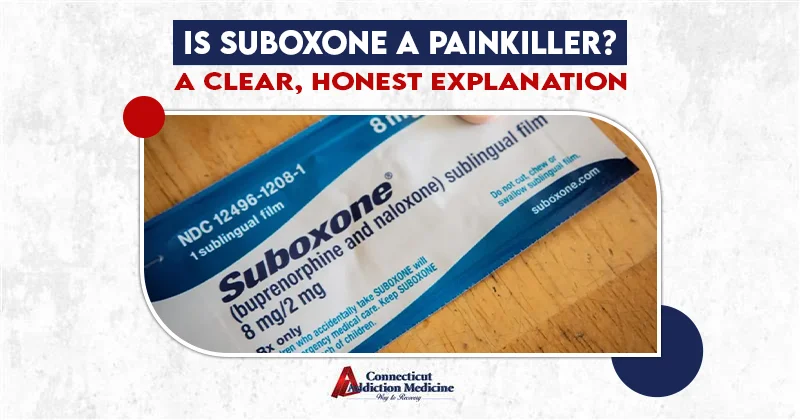
The question “Is Suboxone a painkiller?” is a frequent inquiry from individuals considering their options for the treatment of opioid dependence or chronic pain.
Buprenorphine is a partial opioid agonist, which means it has some of the properties of opioids, but it provides its effects in a different manner than conventional pain medications.
Suboxone is frequently confused with pain relievers such as OxyContin or morphine by patients, as both medications work through the same class of receptors in the body’s nervous system.
However, Suboxone is generally used for the treatment of opioid dependence and not necessarily for the same purpose as other pain medications.
At CT Addiction Medicine, we strive to provide education to our patients about the proper use of buprenorphine and the role it plays in the prevention of withdrawal symptoms, reducing cravings and stabilizing those whose lives have been impacted by opioid dependence.
How Suboxone Works
Understanding the Components
Suboxone is a combination of buprenorphine and naloxone.
- Buprenorphine: A partial opioid agonist that activates opioid receptors moderately. This helps manage withdrawal symptoms without producing the intense “high” associated with full opioids.
- Naloxone: An opioid antagonist that prevents misuse by blocking the effects if injected.
Mechanism of Action
When taken as prescribed, Suboxone works by:
Reducing cravings
Helping patients maintain recovery.
Managing withdrawal
Alleviating symptoms like sweating, anxiety, and muscle aches.
Providing mild pain relief
Although not as strong as traditional painkillers, it can offer some analgesic effects for patients with opioid tolerance.
Is Suboxone a painkiller too?
It can provide some pain relief, but it is not classified as a standard painkiller. Its main purpose is treating opioid dependence.
Is Suboxone a Good Painkiller?
Suboxone doesn’t work for treating acute/severe pain as a standard treatment. It might be prescribed in select cases when treating patients already using opioids to control chronic pain.
Benefits:
- Lower likelihood of abuse versus full potency opioid medications
- Effective in controlling pain in a patient on opioid medications
- Helps to alleviate withdrawal symptoms and cravings
Drawbacks:
- Not useful in treating acute or extreme levels of pain
- May cause negative interactions with other medications
- Must be closely monitored by qualified healthcare consultant
Benefits of Suboxone Beyond Pain Management
Suboxone is mainly prescribed for opioid use disorder. Its benefits include:
- Stabilizing mood and reducing anxiety caused by withdrawal.
- Helping patients maintain sobriety.
- Improving overall quality of life.
CT Addiction Medicine guides patients on proper usage, dosage, and safe tapering plans to minimize risks.
Signs You May Need Suboxone
Some indicators that Suboxone could be part of your treatment plan include:
- History of opioid dependence.
- Experiencing withdrawal symptoms.
- Frequent cravings leading to relapse.
- Difficulty managing chronic pain alongside opioid dependence.
Key Considerations
- Only use Suboxone under medical supervision.
- Do not combine with alcohol or other depressants.
- Inform your doctor about any other medications.
- Attend counseling or therapy for best outcomes.
Addressing Misconceptions
Many people confuse Suboxone with strong painkillers. Common misconceptions:
It’s just like morphine
False, Suboxone is a partial agonist and safer for addiction treatment.
It can replace all painkillers
False, its analgesic effect is mild.
It’s only for addicts
While primarily for opioid use disorder, it can help in managing pain in specific cases.
How Suboxone Supports Recovery
Stabilization
Patients receive Suboxone to manage withdrawal symptoms. This prevents the urge to use illicit opioids.
Maintenance
Maintaining a stable dose helps patients avoid cravings and regain normal daily functions.
Recovery Integration
Therapy, counseling, and lifestyle adjustments are combined with Suboxone treatment to ensure long-term recovery.
Opioid Addiction and Pain Management
Understanding Suboxone also connects with broader topics:
Opioid Tapering
Gradually reducing opioid doses to prevent withdrawal.
Pain Management Alternatives
Non-opioid medications like NSAIDs, physical therapy, or acupuncture.
Behavioral Therapy
Supports patients in coping with pain and addiction triggers.
Conclusion
So, is Suboxone a painkiller? The response to this question is multi-faceted.
Suboxone does not have very strong analgesic effects, however, due to its intended use as a form of treatment for people suffering from opiate Dependency.
CT Addiction Medicine aids in both pain management and recovery from opiate addiction through the psycho-educational process.
Although Suboxone should not be viewed as a substitute for traditional analgesics, it can be of great value in assisting the individual who is trying to maintain their recovery by providing them with stability during the treatment process of recovering from their opiate dependence.
FAQ
Q:Is Suboxone a strong painkiller?
No, its pain relief is mild compared to traditional opioids.
Q:Can Suboxone be used for chronic pain?
Yes, but usually only in patients with opioid dependence.
Q:Is Suboxone addictive?
It has a lower addiction potential than full opioids but should still be taken as prescribed.
Q:How often should Suboxone be taken?
Typically once daily, as directed by your doctor.
Q:Can Suboxone be misused?
Yes, but naloxone reduces the risk if taken correctly.
Q:Is Suboxone suitable for chronic pain?
It can help in some cases but is not a substitute for stronger pain medications.