
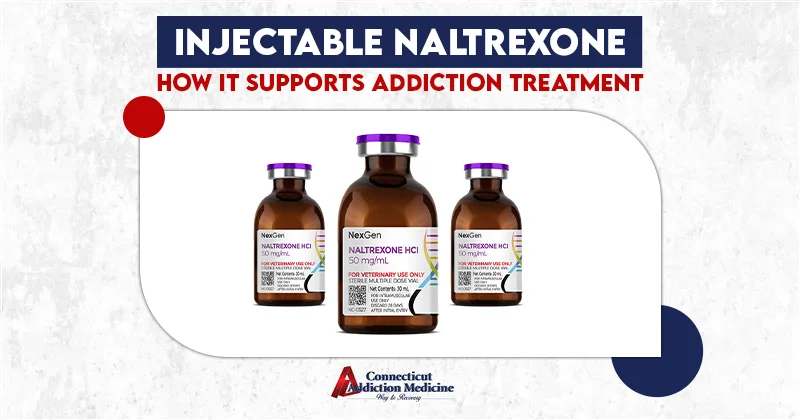
One of the most reliable medical options available today is injectable naltrexone, a medication that supports people who want to stop relying on alcohol or opioids.
It works by blocking the euphoric effects of these substances, helping individuals reduce cravings and lower the risk of relapse.
Injectable naltrexone offers a steady, long-acting effect that reduces the need to remember daily doses. CT ADDICTION MEDICINE helps patients understand their treatment plan and offers them a structured environment where they feel supported, guided, and safe throughout the healing process.
What is Injectable Naltrexone?
Long-Acting Injectable Naltrexone is an improvise medication for opiate and alcohol Use disorder treatment. This long-acting injectable medication is administered once every 4 weeks. It maintains a constant blood concentration level, therefore simplifying the support of individuals who have difficulty with taking oral medications on a daily basis.
Long-Acting Injectable Naltrexone blocks Opiate Receptors in the brain to eliminate the pleasurable effects created by opiate drugs as well as helps decrease Opioid cravings. It Supports individuals committed to sobriety and refraining from relapsing into substance abuse.
How Injectable Naltrexone works in the brain
Naltrexone binds to opioid receptors but does not activate them, thus blocking the effect of the drug on the body’s pleasure system. When patients use injectable naltrexone routinely, they tend to have:
- Decreased desire for drugs
- Decreased chance of relapse
- Increased emotional balance
- Increased control over their recovery process
Benefits of Injectable Naltrexone for addiction recovery
Extended protection
Use on a monthly basis will keep you stable up to four weeks after treatment.
Reduced chance of relapse
Since it blocks the effects of alcohol and opioids, this medication removes the “positive” reinforcement of using those substances.
Improved compliance with treatment
Patients do not have to think about taking medications every day.
Increased assistance with emotional regulation
Many patients report an increase in feelings of serenity and stability throughout the process of recovery.
Who should consider Injectable Naltrexone?
This form of medical treatment is appropriate for the following groups of patients: –
- Alcoholics who are currently in their recovery phase.
- Patients who have successfully finished detoxing from Opioids.
- Patients who desire greater protection from relapse.
- Patients who would rather receive monthly injections instead of taking pills each day.
Role of Injectable Naltrexone in addiction treatment plans
Injectable naltrexone plays a major role in modern recovery plans. It works best when combined with counseling, therapy, peer support, and lifestyle improvements.
Most clinics offer a programmatic strategy; in which they provide medication along with weekly or bi-weekly supervised.
In conjunction with medication, patients are educated on techniques for coping, developing emotional awareness and recognizing and developing behavioral change strategies to aid in developing the healthy reaction to the medication’s protective capability.
When integrated over time this will promote better recovery in a long-lasting sustainable format.
How it helps alcohol addiction
Naltrexone injection for alcoholism lowers the pleasurable sensations linked with alcohol use. Patients report:
- Reduced drinking urges
- More control over impulses
- Better focus during therapy sessions
It supports long-term healing by helping people stay committed to sobriety.
Side effects and what to expect
Some people experience mild effects such as; headache, nausea, fatigue, and injection-site soreness.
For awareness, clinics explain naltrexone injection side effects before starting treatment. This helps patients feel prepared and supported.
Injection Naltrexone: what the procedure looks like
The injection is usually given in the gluteal muscle. It takes only a few minutes. Patients remain under observation for a short period and can return to their routine afterward.
The steady release of medication keeps opioid receptors blocked for weeks, creating a strong defense against cravings.
Naltrexone injection uses
This medication is mainly used for:
- Alcohol addiction
- Opioid relapse prevention
- Strengthening long-term recovery plans
Some clinics also use it to help stabilize mood in early recovery.
Building a holistic treatment plan
1. Medical Support
Medication ensures the brain stays protected from cravings.
2. Therapy and Counseling
Cognitive-behavioral therapy, motivational interviewing, and trauma-focused therapy are common.
3. Family and Social Support
Healthy environments reduce relapse risk.
4. Lifestyle and Nutrition
Healthy habits make recovery easier and strengthen mental health.
Conclusion
Recovery becomes a long-term possibility when treatments are designed with consistency, safety, and patient needs in mind.
Injectable naltrexone supports individuals by reducing cravings and blocking the effects of opioids and alcohol.
This gives patients a chance to rebuild their lives without constant fear of relapse. The medication brings stability to early recovery, which is often the most difficult stage for many people.
Reach out to CT ADDICTION MEDICINE for professional help.
FAQs
Q:What are common naltrexone injection side effects?
Mild headache, nausea, and soreness at the injection site.
Q:Can it be used for alcohol recovery?
Yes, naltrexone injection for alcoholism helps reduce alcohol cravings.