
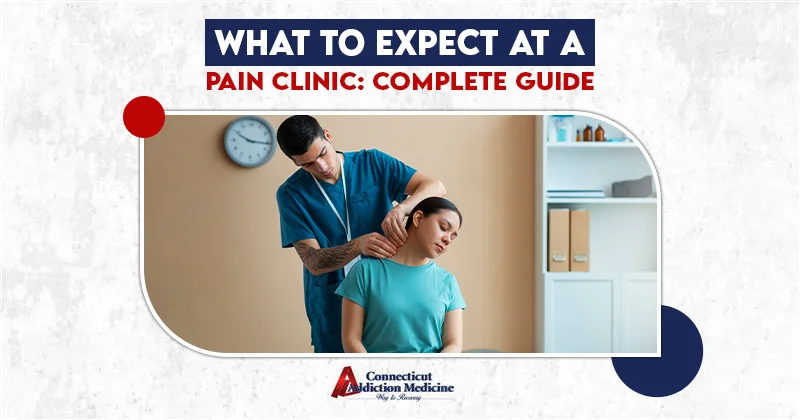
At CT Addiction Medicine, this topic usually comes up in simple conversations between staff, or when someone walks in and says, “I don’t even know where to start anymore.” That’s often how it begins. Not with a clear plan, but with someone trying to explain pain that’s been hanging around longer than it should.
If you’ve been thinking about what to expect at a pain clinic, it helps to look at it less like a formal medical step and more like a process that unfolds over time. No one walks in with everything figured out, and honestly, that’s completely normal.
This guide walks you through everything in a calm, practical way so you know what happens, what questions to ask, and how to make the most of your visit. If you’ve ever searched for the process, this is the kind of grounded, real-world explanation most people wish they had earlier.
How the Conversation Around Pain Usually Starts
Most people don’t decide overnight to visit a pain clinic. It builds up. Maybe something started as a mild issue back discomfort, nerve tingling, joint stiffness and slowly became part of everyday life.
What we often notice is that people come in after trying different things already. Home remedies, medications, maybe even consultations elsewhere. By the time they arrive, it’s not just about the pain it’s about wanting clarity.
So the first real step isn’t treatment. It’s conversation. A proper one. The kind where someone actually listens all the way through without interrupting or rushing to conclusions.
The First Visit Feels More Like Talking Than Treatment
There’s this expectation that the first visit will involve immediate procedures or strong medications. But in reality, it’s usually slower and more thoughtful. You sit down, and the questions begin but not in a mechanical way. More like a back-and-forth. When did this start? What does it feel like? What have you tried so far?
Some patients pause because no one has asked them these things in detail before. Others bring up things they didn’t think were important but they are. There’s also a physical check, of course. Movement, posture, how your body reacts in certain positions. This is part of what’s often called the pain clinic evaluation process, but it doesn’t feel technical it feels like someone trying to connect the dots.
Taking a Closer Look at the Evaluation Process
The pain clinic evaluation process isn’t rushed, and that’s probably the biggest difference people notice.
Detailed Symptom Analysis
It starts with understanding patterns. Pain that worsens at night. Pain that shifts locations. Pain that reacts to stress or activity. This helps distinguish between different types of pain, such as nerve-related or musculoskeletal. These details may seem small, but they help shape the bigger picture.
Recommending Diagnostic Tools
Sometimes tests are suggested, sometimes not. It depends. These could include imaging studies like MRIs or nerve conduction tests. There’s no fixed rule that everyone needs scans or diagnostics. If something is unclear, then yes, further checks might be done.
Discussing Initial Findings
The key moment is when everything is explained back to you. Not in complicated terms, just in a way that makes sense. That moment where patients say, “Okay… now I get it.”
The Kind of Conditions That Show Up Most Often
People often assume these clinics only deal with extreme cases. But that’s not really how it looks day to day.
Some of the most common include the following:
- Back and neck pain
- Joint-related discomfort (shoulders, knees, hips)
- Nerve-related conditions such as neuropathy
- Post-surgical pain
- Headaches and migraines
- Fibromyalgia and widespread pain syndromes
You’ll see people with back pain that never fully went away. Joint issues that keep returning. Nerve-related discomfort that feels sharp or burning. Headaches that interfere with routine. A lot of discussions revolve around chronic pain, especially when it starts affecting sleep, work, or even mood. It’s not always about intensity it’s about persistence.
Then there are nerve-related cases. Those are different. They require a bit more attention and understanding. That’s why people often ask about the best pain clinic for neuropathic pain because not every place handles those situations the same way.
Best Pain Clinic for Neuropathic Pain
When it comes to nerve-related discomfort, things can feel different sharper, more unpredictable, sometimes even difficult to describe. That’s why patients often ask about the best clinic for neuropathic pain, because this type of pain doesn’t always respond to general approaches.
In these cases, the way questions are asked becomes more detailed. Patients might be asked about sensations like burning, tingling, or sudden electric-like pain. These clues help narrow down whether nerves are involved and to what extent.
Treatment also tends to be more specific. Instead of relying only on general methods, care may include targeted therapies, nerve-focused medications, or specialized procedures. What matters most is that the approach recognizes the difference because neuropathic pain isn’t just another type of discomfort, it behaves differently and needs to be handled that way.
Services That Are Usually Part of the Process
When patients ask what actually happens next, the answer isn’t just one thing. A pain clinic usually works through a mix of approaches.
It’s often explained something like this:
- Sitting down for a proper assessment (detailed assessment and diagnosis)
- Reviewing and adjusting medications if needed (medication management)
- Bringing in physical therapy when movement is involved
- Considering injections or targeted treatments in certain cases (intervention procedures)
- Addressing stress or emotional impact linked to pain (behavioral therapy)
- Planning recovery steps instead of short-term fixes (rehabilitation therapy)
- Talking about daily habits that might be affecting progress (lifestyle modification guide)
Not everyone goes through all of these. It depends on the situation. But having options makes a difference.
How Treatment Decisions Are Usually Made
Once things are clearer, the next step is deciding what to do about it. The clinic treatment options aren’t handed over as instructions they’re discussed. Sometimes it starts simple. Movement changes. Light exercises. Adjustments in routine. These don’t sound big, but they matter more than people expect. If needed, other options are considered. Procedures, targeted therapies, or additional support. But nothing is rushed into. Medication may come into the conversation, but it’s not the center of everything. It’s just one part of a bigger plan.
Conditions Treated and Available Treatment Options
The table shows a simple, practical overview that often helps patients connect their condition with possible next steps:
| Conditions Treated | Treatment Options Available in Clinic |
| Back and neck pain | Physical therapy, posture correction, injections |
| Joint pain (knee, shoulder, hip) | Rehabilitation plans, guided exercises, medication support |
| Neuropathic (nerve) pain | Nerve-targeted medications, nerve blocks, specialized therapies |
| Post-surgical pain | Recovery monitoring, pain control plans, gradual rehab |
| Headaches and migraines | Trigger management, medications, lifestyle adjustments |
| Muscle-related pain | Stretching programs, therapy sessions, movement correction |
| Chronic pain conditions | Long-term management plans, combined therapies |
Choosing Where to Go Matters More Than People Think
At some point, people start searching pain clinic near me. It’s a natural step. But what they often realize later is that not all clinics approach things the same way. Some focus heavily on quick solutions, while others take time to understand the full picture. For nerve-related conditions especially, choosing carefully matters. The best pain clinic for neuropathic pain is usually one that doesn’t treat it like general discomfort but as something that needs a slightly different approach. That difference shows in how questions are asked, how plans are made, and how progress is tracked.
Questions That Naturally Come Up During Visits
No one walks in without questions. Even if they don’t ask them right away, they’re there.
Over time, certain ones come up again and again:
- What’s really causing this?
- Is this something that can improve?
- What are my options from here?
- How long does this usually take?
- What can I do on my own?
- How do we know if things are working?
These questions shape the direction of care more than people realize.
What the Experience Feels Like Over Time
After a few visits, a pattern starts to form. Nothing feels random anymore. A pain clinic doesn’t work on instant results. It’s more about steady progress. Some days feel better, some don’t but overall, there’s movement in the right direction. Patients often say the biggest shift isn’t just physical it’s understanding what’s happening and knowing what to do next. That alone reduces a lot of uncertainty.
Final Words
In simple terms, visiting a pain clinic isn’t about walking in and walking out with a quick fix. It’s about starting a process that makes sense over time. At CT Addiction Medicine, that process usually begins with listening and builds into something more structured step by step, without rushing it. For anyone still unsure, understanding what to expect at a pain clinic can take away a lot of hesitation. It’s not as complicated as it sounds instead it’s just a more thoughtful way of dealing with something that hasn’t been resolved elsewhere.
FAQs
-
Will I be given treatment immediately?
Not always. The first visit is often about understanding before deciding anything.
-
Do all patients go through the same process?
No, it changes depending on the condition and individual needs.
-
Is nerve pain treated differently?
Yes, neuropathic pain often requires a slightly different approach compared to other types.
-
How long does it take to see improvement?
It varies. Some notice changes early, while others see gradual progress.
-
Are medications always part of treatment?
Not necessarily. They may be included, but not always the main focus.
-
Can I manage some parts of recovery on my own?
Yes, and in many cases, small daily changes play an important role.