
To treat your knee pain, you will need to know chronic knee pain causes.
Chronic knee pain causes may be injury, repeated stress, inflammation, or just from being old. Once the underlying cause is known the patient can be appropriately treated and improve their mobility and quality of life.
This article will outline the structure of the knee joint, list knee pain causes and symptoms and discuss how CT Addiction Medicine can help to provide effective treatments for people who suffer with chronic knee pain.
Understanding Knee Anatomy
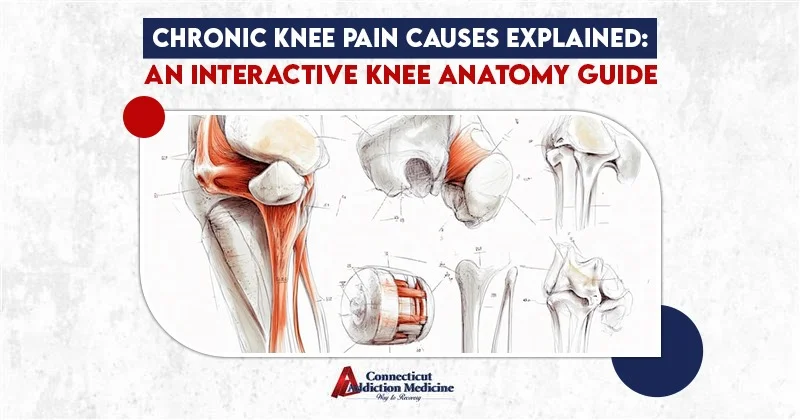
Understanding how the knee works is necessary before addressing chronic knee pain causes. The knee is a complex joint that is made up of bones, cartilage, ligaments, and tendons, which allow for motions of your whole body and protect you when you walk, run, and jump.
Key Components of the Knee
- Femur (bone in the upper leg)
- Tibia (bone in the lower leg)
- Patella (a/k/a kneecap)
- Meniscus (a cushioning cartilage in the knee)
- Ligaments (ACL, PCL, MCL, LCL)
Understanding the knee anatomy explained is important when working with both your health care provider and your health insurance in order to ascertain where the pain originates and how to address it.
Chronic knee pain will occur depending on what component is damaged or injured and understanding your anatomy will enable both you and your provider to effectively treat it.
Common Knee Pain Causes and Symptoms
There are several reasons for knee pain causes and symptoms. Some of the most common include:
Osteoarthritis
Degeneration of cartilage in the knee joint leading to stiffness and pain.
Rheumatoid Arthritis
An autoimmune condition causing inflammation of the knee.
Ligament Injuries
ACL, PCL, MCL, or LCL injuries can cause swelling, instability, and pain.
Meniscus Tears
Damage to cartilage can create clicking or locking sensations.
Tendinitis
Inflammation of tendons, often due to overuse.
Bursitis
Swelling of small fluid-filled sacs that cushion the knee joint.
Symptoms can include swelling, stiffness, popping or cracking sounds, and limited range of motion. Understanding these knee pain causes and symptoms allows for early intervention and better management.
What Causes Chronic Knee Pain?
Chronic knee pain is described as knee pain lasting longer than 12 weeks. Some common causes of chronic knee pain include:
- Aging and degenerative changes
- Overuse or repetitive stresses (i.e. from sports or work)
- Trauma from past fracture(s) or surgery
- Being overweight or having a large body weight, which places excess stress on the knee(s)
- Underlying medical conditions like arthritis
Identifying the causes of chronic knee pain allows for the development of a personalized treatment plan with CT Addiction Medicine specialist(s) that may include medication, physical therapy, and/or lifestyle change.
Chronic Knee Pain in Young Adults Causes
Chronic knee pain in young adults can happen for a number of reasons, including:
- Torn ligaments or damaged menisci related to sports injuries
- Injuries related to repetitive movement (for example, running, jumping and cycling)
- Poor posture and/or improper techniques when exercising
- Early-onset arthritis (inflammatory conditions can also cause chronic knee pain)
Identifying these causes is essential to ensuring that young patients get the timely treatment they need and protect themselves from long-term damage due to chronic knee pain.
CT Addiction Medicine is able to help young patients with injury prevention and management strategies for chronic knee pain.
Chronic Knee Pain Causes in Runners
Knee pain is frequently caused by runners as a result of the following reasons:
- Patellofemoral Pain Syndrome (“Runner’s Knee”)
- Iliotibial Band Syndrome
- Overtraining (overuse) and repetitive stress injuries
- Improper-fitting shoes.
Knee Pain Causes and Treatments
To manage knee pain effectively, you must know its causes, as well as the different treatment options available. Available forms of treatment may include:
- Physical therapy to strengthen those muscles surrounding the affected knee.
- Medication to treat both pain and inflammation.
- Lifestyle modifications, such as dietary changes to promote weight loss and moderate impact exercises.
- Surgical intervention if the knee injury is severe enough (e.g., ligament reconstruction, joint replacement).
How Do Doctors Diagnose Knee Pain Causes?
Doctors use a variety of techniques to diagnose knee pain causes:
- Physical exams to evaluate swelling, how much the patient can move their knee, and sensitivity
- The patient’s medical history that can help the doctor learn about when their knee problems started, how long they have lasted and what made them worse
- Imaging studies (X-rays, MRIs, CT scans) which will help determine if there is any physical damage to the patient’s knee joint
- Lab work to rule out any inflammatory disease or autoimmune condition.
A proper diagnosis will provide the doctor with the information needed for proper care for the patient and will help avoid any other complications.
CT Addiction Medicine will assist the patient with understanding the results of their test and how to formulate a plan to recover.
Chronic Knee Pain Causes Diagnostics Tests
Accurate diagnosis often involves diagnostics tests, which may include:
- X-Rays to assess bone injuries
- MRI to evaluate soft tissue injuries
- CT scans for detailed images of bones
- Ultrasound to evaluate ligaments and tendons
Knee Pain Root Causes List
The primary causes of knee pain are typically related to:
- Ligament Injuries (ACL, PCL, MCL, LCL)
- Cartilage Damage (Meniscus Tears, Chondromalacia)
- Arthritis (Osteoarthritis or Rheumatoid Arthritis)
- Tendonitis/Bursitis
- Patellar Tracking Disorders
- Repetitive Stress Injuries
Why Does My Knee Hurt All the Time?
Your question “Why am I constantly feeling discomfort in my knee?” could be caused by chronic conditions, trauma, or inflammation. You should not disregard long-lasting discomfort. Examples of frequent reasons may include:
- Degenerative Joint Disease
- Chronic Overuse or Strain
- Untreated Trauma
- Autoimmune Conditions – such as RA
Conclusion
Knowing chronic knee pain causes is the first step in curing it. It could be from injury to ligaments, arthritis or overuse. The source of the pain needs to be identified to help you recover from the pain.
CT Addiction Medicine can help patients manage their chronic knee pain through providing education about knee anatomy explained and the knee pain causes and treatments.
Anyone addressing what causes chronic knee pain should consult a healthcare provider for the best chance of restoring their ability to move and improving the quality of their life.
FAQs
What are the main causes and symptoms of knee pain?
The knee pain causes and symptoms are swelling, stiff knee joints, clicking sound, and instability. The causes can range from arthritis and ligament injuries to a torn meniscus, tendinitis, and bursitis.
How do I find the root cause of chronic knee pain?
Your knee pain can be determined by both physical examinations and imaging studies, as well as by discussing your previous activities with a medical professional familiar with your medical history.
Are there particular causes of chronic knee pain in young adults?
Yes, chronic knee pain in young adults causes are related to sports injuries, activity overload, and premature onset of arthritis.