
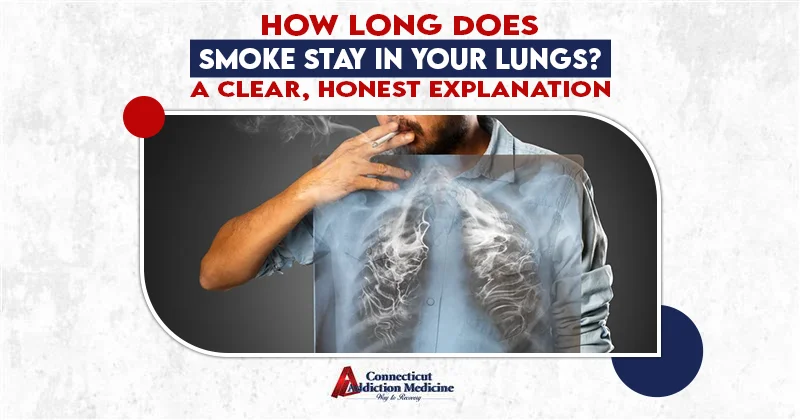
Have you ever wondered how long does smoke stay in your lungs after smoking a cigarette?
Many people think that once they stop smoking, their lungs instantly recover. The truth is different.
Depending on how often someone smokes, their lungs’ health, and how well their body heals, smoke can stay in the lungs. This applies to both smokers and non-smokers. It may remain for days, weeks, or even months.
If a person wishes to quit smoking or protect his/her lungs from dangerous toxins, understanding how this process works and why it occurs will be important.
Through the use of lifestyle modification and an effective treatment plan, CT Addiction Medicine assists people with overcome their addiction to cigarettes.
What Happens to Smoke Once You Inhale
When you inhale smoke, it enters your lungs and immediately affects your respiratory system. Smoke contains thousands of chemicals, including tar, nicotine, and carbon monoxide.
These substances stick to the lining of your lungs, reducing their ability to transfer oxygen efficiently.
Does smoke stay in your lungs permanently?
Chemicals found in some containers remain stored in the body for long periods of time. The human body goes through a continuous process of excreting toxins from the body.
The cilia, which are microscopic hairs located on the surface of the upper respiratory tract, are responsible for the expulsion of particulates and pathogens from within the human respiratory tract.
The process of clearing away those toxins is hindered by the harm that is caused to cilia due to smoking.
Short-Term Effects of Smoke in Your Lungs
A single cigarette can cause lungs to be affected temporarily, resulting in a person coughing, becoming short of breath and producing phlegm, among other symptoms.
These symptoms are the result of the lungs attempting to remove toxic components from the body.
In the case of someone who smokes only occasionally, how long does cigarette smoke stay in your lungs is typically considered to be measured in a matter of days.
However, frequent smokers continue to inhale cigarette smoke on a daily basis, therefore having a longer time for the accumulation of toxins to occur.
This is why quitting smoking as soon as possible after starting is the best option.
Long-Term Effects of Smoke Exposure
Long-term lung damage is caused by chronic smoking. The chemicals found in smoke create inflammation over time, reducing lung capacity and increasing the likelihood of developing chronic bronchitis, emphysema, and lung cancer.
Does smoke stay in your lungs forever
Although some damage will heal on its own over time, the effects of long-term smoking can make some of those changes permanent.
After quitting smoking, the lungs improve their ability to remove harmful particles independently; however, it is important that you remain patient and seek the appropriate medical care.
How long does secondhand smoke stay in your lungs
Enclosed spaces may allow you to breathe passive smoke right into your lungs. Because children and non-smokers are much more vulnerable to the harmful effects of secondhand smoke.
The combination of passive smoke and other contaminants in closed areas could result in long-term respiratory concerns, as well as increased chances of suffering from lung infections after short-term contact.
How Long Does Smoke Stay in the Lungs? A Timeline
Understanding the timeline helps you set realistic expectations for recovery:
1.Immediate Effects
Right after inhaling, your lungs experience inflammation and irritation.
2.Within 24 Hours
Nicotine levels drop significantly, and carbon monoxide is cleared from your bloodstream.
3.Within Days
Your lung cilia begin to repair, helping to push out mucus and toxins.
4.Weeks to Months
Lung function improves, and coughing or phlegm production reduces.
5.Months to Years
Long-term lung damage gradually heals, but certain effects may be irreversible.
Tips to Help Your Lungs Recover
1.Quit Smoking
The most effective way to reduce toxins.
2.Stay Hydrated
Water helps thin mucus and flush toxins.
3.Exercise Regularly
Improves lung capacity and overall health.
4.Eat Antioxidant-Rich Foods
Helps repair lung tissue.
Conclusion
Knowing how long does smoke stay in your lungs will guide you when making choices regarding your health.
The harmful substances from smoking and second-hand smoke can stay in your body for days, weeks or months affecting your lung function as well as your overall health.
Intervening early, stopping smoking and adopting healthy lifestyle changes will greatly benefit your lungs and speed up recovery from smoking damage.
CT Addiction Medicine is a complete source of information and methods for those wanting to quit smoking and remove the toxins from their lungs.
Keep in mind that your body is strong and with a little determination you can get your lungs back to a healthier state.
Education, patience and professional assistance will help you on the journey to better respiratory health.
FAQs
Q:How long does cigarette smoke stay in your lungs?
For occasional smokers, smoke can clear in a few days. For long-term smokers, chemicals may linger for months.
Q:Does smoke stay in your lungs forever?
Most smoke chemicals eventually leave your lungs, but long-term damage may be permanent.
Q:How long does secondhand smoke stay in your lungs?
Exposure can lead to toxins staying in your lungs for several days, depending on air quality and duration of exposure.
Q:Can lung health improve after quitting smoking?
Yes, with proper support and healthy habits, lung function can improve over time.