
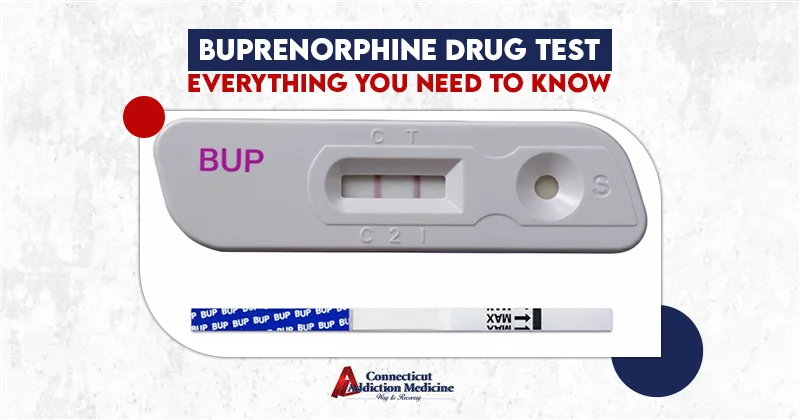
A buprenorphine drug test is distinct from regular opioid drug tests. Most standard urine drug tests do not identify buprenorphine without applying a test designed to target specifically buprenorphine.
That is why people frequently ask, “does buprenorphine show up on a drug test?” and whether tests like DOT screenings or employment panels check for it.
Understanding how buprenorphine is processed, how long it stays in the body, and what types of tests detect it can help you feel confident and prepared.
CT Addiction Medicine provides trusted, compassionate treatment for people using buprenorphine and other evidence-based medications for recovery.
What is a Buprenorphine drug test?
A buprenorphine drug test is a specialized test designed to detect buprenorphine and its metabolite, nor buprenorphine, in urine, saliva, blood, or hair. It is not included in basic 5-panel tests. Only expanded drug panels detect it.
Buprenorphine is a partial opioid agonist. It attaches to opioid receptors but with less intensity than drugs like heroin, fentanyl, or oxycodone. That is why buprenorphine is used in addiction treatment.
How the Test Works
- The test measures the chemical breakdown of buprenorphine
- It checks both the drug and its metabolites
- Most commonly performed using urine samples
- Detection time varies based on test type
Types of tests used to detect Buprenorphine
1. Urine Testing
Urine tests are the most common. They check for both buprenorphine and nor buprenorphine.
Detection window:
3–6 days for most people
Longer for chronic use
2. Saliva Testing
Less common but useful for quick screening.
Detection window:
Up to 2 days
3. Blood Testing
Used in medical or legal situations.
Detection window:
Only a few hours
4. Hair Testing
Rare but powerful for long-term use detection.
Detection window:
Up to 90 days
Does Buprenorphine Show Up on a Drug Test?
Not all drug tests detect buprenorphine.
A standard 5-panel test will NOT show buprenorphine. It requires a specific test—often called a “buprenorphine panel.”
Some employers, medical programs, and treatment centers use expanded tests. That is where the confusion begins.
Buprenorphine will show up only if the test is designed to detect it.
Does DOT Drug Test for Buprenorphine?
The Department of Transportation (DOT) does not routinely test for buprenorphine in the standard federal panel.
However:
- DOT medical examiners may ask about medications
- You must disclose prescribed medications honestly
- Buprenorphine may require documentation from your provider
But the DOT urine test itself does not automatically include buprenorphine detection unless there is a specific reason to add it.
What Is Buprenorphine on a Drug Test?
Buprenorphine typically appears as:
- “Buprenorphine”
- “BUP”
- “Nor buprenorphine”
- “BUP/NORBUP positive”
Understanding the results helps prevent confusion during treatment or employment verification.
How long Buprenorphine stays in each test type
| Test Type | Detection Time | Notes |
| Urine | 3–6 days | Most common test |
| Saliva | 24–48 hours | Quick results |
| Blood | Few hours | Used in accidents or emergencies |
| Hair | Up to 90 days | Expensive and rare |
Why Buprenorphine Requires a Special Test
Reasons:
- It is a partial opioid agonist
- Chemically different from common opioids
- Standard tests target heroin, morphine, codeine, oxycodone
- Buprenorphine and its metabolites require targeted detection
How Buprenorphine is metabolized
Buprenorphine breaks down into nor buprenorphine. Tests look for both because they confirm actual use.
If the test detects the metabolite, it proves buprenorphine was swallowed, injected, or dissolved as intended.
How long does Buprenorphine stay in the body?
Several factors affect detection timing:
Factors That Influence Detection
- Dosage
- Frequency of use
- Body fat percentage
- Metabolism
- Hydration
- Duration of treatment
- Age
- Liver function
Signs a Test Might Be Looking for Buprenorphine
Employers or programs may test for it if:
- You are in addiction treatment
- You work in a safety-sensitive job
- You are a healthcare worker
- You are part of a legal or probation program
- You are using MAT (Medication-Assisted Treatment)
Why Doctors Use Buprenorphine Testing
Doctors test for buprenorphine to make sure patients are using medications safely and correctly.
Reasons for Testing
- Monitoring treatment
- Preventing misuse
- Ensuring adherence
- Tracking progress
- Keeping treatment safe
Can Buprenorphine be missed on a test?
Because standard tests ignore it, some people receive false assumptions about “negative” results.
Can Buprenorphine cause a false positive?
No. Buprenorphine requires a specific test. It does not trigger positives for heroin, oxycodone, or methadone.
Understanding Stigma
Many people fear drug testing because of stigma. Clear information helps reduce unnecessary fear, especially for people in recovery or employment settings.
Tips to prepare for a Buprenorphine test
Do
- Bring your prescription
- Inform your provider
- Stay hydrated
- Follow instructions
Do Not
- Tamper with the sample
- Stop medication abruptly
- Skip doses to avoid detection
Conclusion
Understanding how a buprenorphine drug test works gives you confidence and peace of mind.
Since buprenorphine requires a specialized test, it does not appear on regular drug panels unless specifically included.
This means you should always confirm what type of test is being used, especially if you’re undergoing employment testing, DOT clearance, legal testing, or treatment monitoring.
Buprenorphine plays a major role in helping people recover from opioid use disorder, and drug testing is simply a tool to ensure safety. The more you understand detection windows, metabolism, and the difference between standard panels and targeted tests, the easier it is to manage expectations.
CT Addiction Medicine offers compassionate, evidence-based support to help you recover with confidence and dignity.
FAQs
Q:Will a buprenorphine drug test show up on a regular 5-panel test?
No. Only specialized panels detect it.
Q:Does buprenorphine show up on a drug test for employment?
Only if the employer orders a buprenorphine panel.
Q:How long does buprenorphine stay in urine?
Usually 3–6 days.
Q:Can DOT tests detect it?
DOT does not test for it unless specially added.
Q:What does buprenorphine look like on results?
It appears as buprenorphine, BUP, nor buprenorphine, or BUP/NORBUP.
Q:Is there a drug test for buprenorphine only?
Yes. Labs can order a single-panel buprenorphine test.